


Knife Care Guide: Looking After a Handmade Hunting Knife
- wildriverforgeuk
- Aug 2
- 4 min read

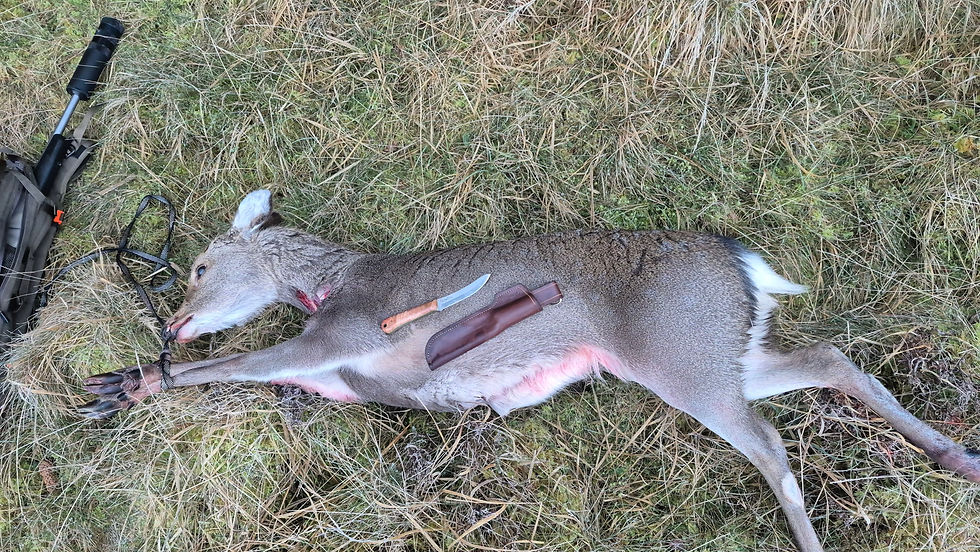
At Wildriver Forge, every knife is crafted to be used, not hidden away. Whether you're stalking roe deer in the Scottish Borders, preparing game after a successful day on the hill, or simply carrying your favourite field knife on outdoor adventures, proper care ensures your knife performs exactly as it was designed to for many years to come.
The good news is that maintaining a handmade hunting knife is straightforward. A few simple habits will protect the blade, preserve the handle, and ensure your knife is always ready when you need it most.
Clean Your Knife After Every Use
A hunting knife is exposed to moisture, dirt, blood, and organic material that can affect both the blade and the handle if left untreated.
After use:
Rinse the blade with warm water if necessary.
Use a mild soap to remove any residue.
Dry the knife thoroughly with a clean cloth.
Pay particular attention to the area where the blade meets the handle.
Never leave a knife damp or dirty overnight. Moisture trapped around the handle or inside a sheath can eventually lead to corrosion, even on high-quality stainless steels.
Keep the Edge Sharp
A sharp knife is a safer knife.
When a blade becomes dull, more pressure is required to make each cut, reducing control and increasing the chance of slipping.
Rather than waiting until the edge is completely blunt, touch it up regularly using a leather strop, ceramic rod or fine sharpening stone. Small, regular maintenance sessions preserve the original edge geometry and are far easier than restoring a heavily worn blade.
If you're unsure how to sharpen correctly, take your time. Consistency of angle is far more important than speed.
Protect the Steel
Many Wildriver Forge knives are crafted from premium stainless steels such as 14C28N, chosen for their excellent balance of toughness, edge retention, and corrosion resistance.
Although stainless steel is highly resistant to rust, it is not completely immune to corrosion.
After cleaning:
Ensure the blade is completely dry.
Apply a very light coat of food-safe mineral oil if the knife will be stored for an extended period.
Store the knife in a dry environment.
This simple routine keeps the steel looking its best while providing additional protection.
Caring for Carbon Steel
If your knife features a carbon steel blade, it deserves a little extra attention.
Carbon steel develops a natural patina over time, which many users appreciate as a record of the knife's working life. However, it is more susceptible to surface rust if neglected.
After each use:
Clean the blade promptly.
Dry it completely.
Apply a light coat of protective oil before storage.
With regular care, a carbon steel knife will reward you with exceptional cutting performance and character that develops uniquely over time.
Looking After the Handle
Every handle material has its own personality.
Whether your knife features stabilised wood, Kirinite, G10, or another premium material, keeping the handle clean will maintain both its appearance and grip.
Simply wipe it down after use and avoid prolonged exposure to harsh chemicals or excessive heat.
Natural materials may benefit from an occasional application of conditioning oil, while synthetic materials generally require nothing more than warm water and a soft cloth.
Don't Store Your Knife in the Sheath
This is one of the most common mistakes people make.
Leather sheaths are designed for carrying your knife, not for long-term storage.
Leather naturally absorbs and retains moisture from the environment. Over time, this moisture can affect the blade.
If you're putting your knife away for more than a few days:
Remove it from the sheath.
Wipe the blade clean.
Apply a light protective oil if appropriate.
Store the knife in a dry place.
Your leather sheath will also benefit from occasional treatment with a quality leather conditioner to keep it supple and protected.
Use the Right Tool for the Job
A hunting knife is a precision cutting tool.
Avoid using it to:
Pry open containers.
Twist in hard materials.
Strike metal objects.
Cut wire.
Dig into soil or stone.
Using the knife within its intended purpose protects both the blade and your safety.
Regular Inspection
Every so often, take a few moments to inspect your knife.
Look for:
A sharp, even edge.
Clean blade surfaces.
Secure handle scales.
Healthy leather sheath.
Any signs of unusual wear.
Small issues are much easier to address before they become larger problems.
A Tool with a Story
One of the joys of owning a handmade knife is watching it develop character through honest use.
A polished blade will gather faint marks from the field.
A leather sheath will soften and darken with age.
A carbon steel blade may develop a beautiful patina that reflects years of service.
These are not flaws.
They are reminders of early mornings on the hill, successful stalks, campfires, and time spent outdoors.
A handmade knife should never remain pristine forever. It should become part of your own story.
Final Thoughts
A Wildriver Forge knife is built to work hard, but like any fine tool, it deserves a little care in return.
Clean it after use. Keep it sharp. Store it properly. Respect the materials from which it is made.
Do that, and your knife won't simply serve you for years—it may well become a piece of kit that is passed on to the next generation.
Looking for a Handmade Hunting Knife?
If you're searching for a handcrafted hunting knife designed for the demands of the British countryside, explore the Wildriver Forge collection. Every knife is individually crafted in Scotland using carefully selected steels and premium handle materials, combining traditional craftsmanship with practical performance in the field.

Comments